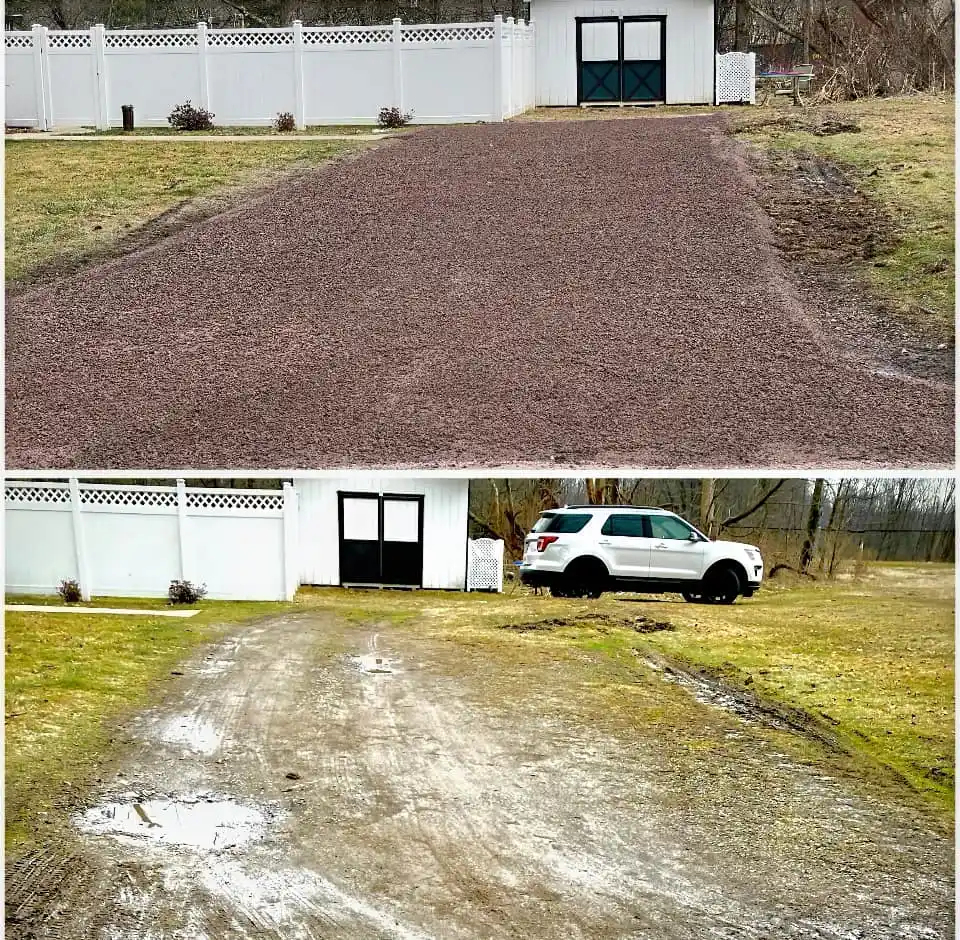
Muddy Driveway Repair That Fixes the Water and Failed Base
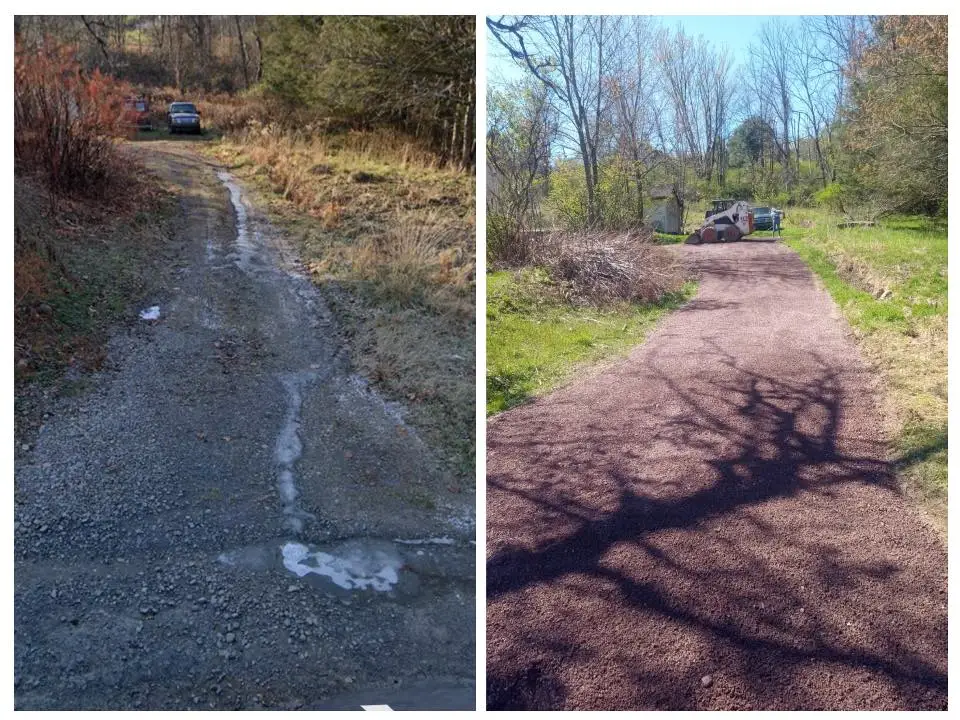
If your driveway turns soft, soupy, or deeply rutted every time it rains, adding another load of stone is usually not the answer. Mud is a warning that water is getting into the driveway, the stone is mixing into weak soil, or the surface has lost the shape it needs to shed runoff.
Alliance Excavating & Stone Works provides muddy driveway repair for homeowners throughout Sweet Valley, the Back Mountain, and surrounding communities in Northeastern Pennsylvania.


Get a Free Estimate
Whether you need affordable driveway repair near you, a drainage solution, or a full gravel driveway installation, we’re ready to help.
Quick Answer: What Is the Permanent Fix for a Muddy Driveway?
A permanent muddy driveway fix starts by controlling the water. The driveway may then need soft material removed, geotextile fabric installed to keep soil and stone separated, the base rebuilt, and the surface properly graded and compacted.
Dumping loose gravel over wet mud usually hides the problem instead of correcting it.

Why Does a Gravel Driveway Keep Turning to Mud?
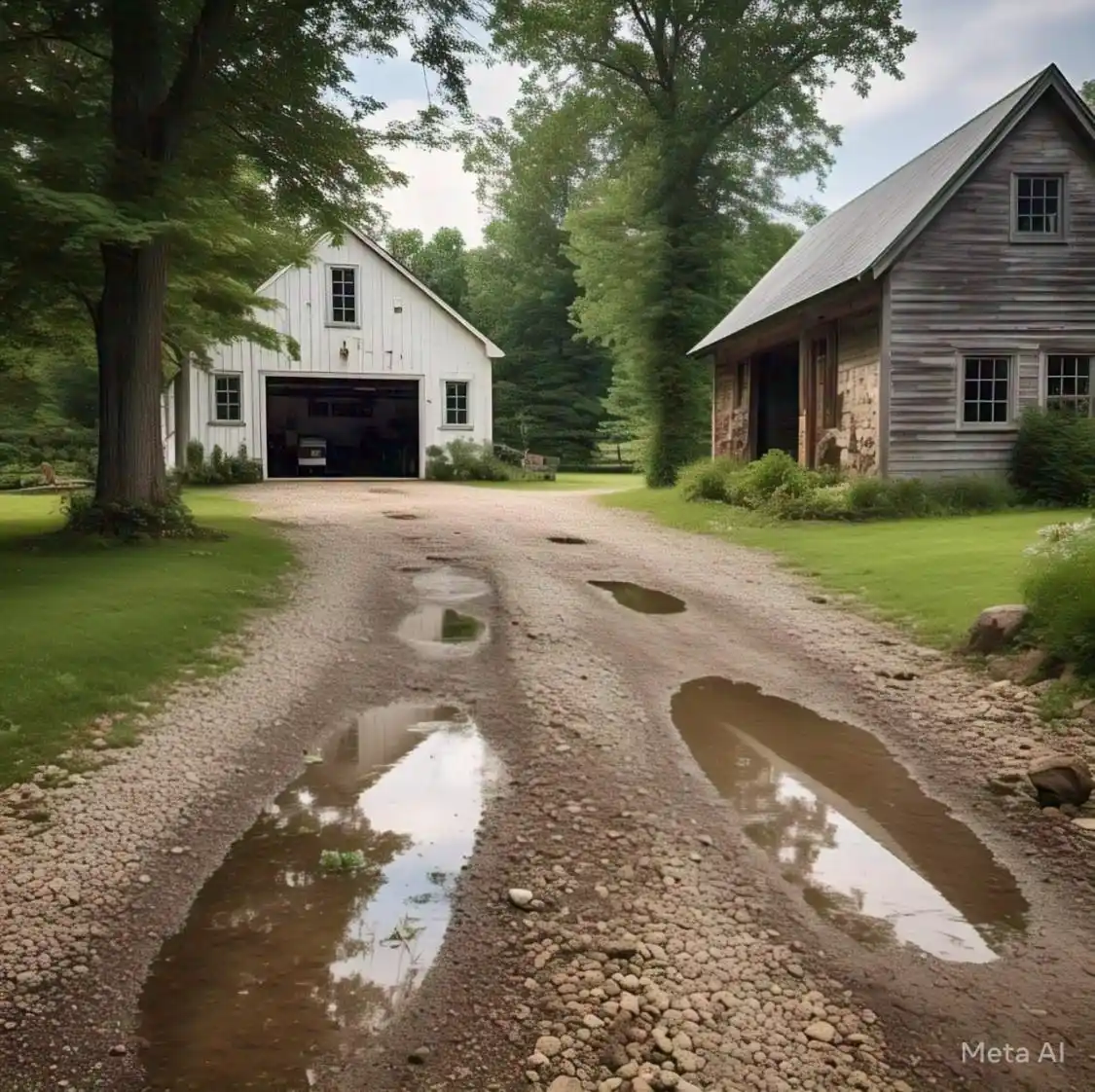
A gravel driveway becomes muddy when the ground underneath stays saturated or the surface allows water to sit, run down the wheel tracks, or enter from the surrounding property.
Once the subgrade becomes soft, vehicle traffic pushes the stone downward and pumps wet soil upward. The driveway may look acceptable during dry weather and then fail again during heavy rain or spring thaw.
Common causes include:
A flat or sunken surface that holds standing water
Wheel ruts that act like channels and carry water down the driveway
Runoff entering from a road, yard, roof, bank, or neighboring slope
Seasonal groundwater or a spring bleeding out of a hillside
Missing, blocked, or poorly shaped side drainage
A failed culvert or an outlet that cannot move enough water
Stone placed directly over soft soil without proper separation
Loose or rounded stone that does not lock together
Repeated delivery trucks, trailers, or heavy vehicles working over a weak area
Too little compacted base material
Here is the practical field rule:
If water is coming out of a bank, crossing the driveway, or collecting in the tire tracks, the driveway needs a safe outlet before it needs another cosmetic layer of stone.

Years of Experience
Signs You Need Muddy Driveway Repair
You may need more than routine grading when you notice any of the following:
- Tires sink or spin after rain
- Mud pushes upward through the stone
- Deep ruts return shortly after grading
- Water sits for hours or days
- The driveway entrance stays soft while the remaining surface is firm
- New stone repeatedly disappears into the ground
- Runoff cuts a channel down the driveway
- The surface washes toward the road, lawn, ditch, or garage
- A low section feels spongy under a vehicle
- Spring thaw turns the driveway into mud every year
- Delivery trucks avoid the driveway or leave deep damage
- Water runs toward the garage or foundation
These symptoms tell us where to begin, but they do not all require the same repair.
A short saturated entrance, a long hillside driveway, and a driveway crossed by spring water must be handled differently. That is why we inspect the water movement and base condition before recommending the work.
Our Muddy Driveway Repair Process
Every job starts with the cause. We do not assume that one material, one drain, or one repair depth is right for every property.
1. Inspect the Water Path
We inspect the driveway surface and the surrounding property, including:
- Wheel tracks
- Banks and hillsides
- Downspouts
- Road runoff
- Culverts
- Ditches and swales
- Low spots
- Garage entrances
- Existing drainage outlets
When possible, seeing the property shortly after rain makes the problem easier to diagnose.
The goal is to identify where the water starts, where it travels, where it becomes trapped, and where it can be discharged without creating a different problem.
2. Determine How Deep the Failure Goes
Some driveways only need their surface reshaped. Others have stone mixed several inches into wet soil.
We check the size and depth of the soft area so the repair addresses the failed material instead of covering it.
A shallow rutting problem should not automatically become a full reconstruction. At the same time, a deeply saturated base will not be fixed by scratching the surface with a machine.
3. Correct the Drainage and Grade
Depending on the property, the muddy driveway solution may involve:
- Regrading the driveway
- Restoring a proper crown
- Opening or reshaping a swale
- Correcting a roadside or driveway ditch
- Replacing or installing a culvert
- Adding a trench drain near a garage
- Redirecting water entering from a bank or hillside
- Creating another practical path for water to leave the driveway
We do not install drainage simply to say that a drain was installed.
The drainage must have enough fall, an appropriate outlet, and a layout that matches how water actually moves across the property.
4. Remove Failed Material When Necessary
When the existing base is saturated, contaminated with soil, or too weak to support traffic, the failed material may need to be excavated.
The excavation depth is based on what we find on site—not a one-size-fits-all number copied from the internet.
Removing bad material matters because compacted stone cannot perform correctly when it is sitting on a moving layer of mud.
5. Install Geotextile Separation Fabric Where Needed
Geotextile driveway fabric helps keep the soil below from mixing with the stone above.
It is especially important where:
- Soft ground has been swallowing stone
- Mud is pumping upward
- The driveway base has mixed into the subsoil
- A rebuilt section needs separation from weak ground
- Repeated vehicle loads are deforming the surface
This is driveway-grade geotextile designed for separation and load support—not thin garden weed barrier.
Fabric is not a substitute for drainage. It works as part of the complete repair.
6. Rebuild, Grade, and Compact the Driveway
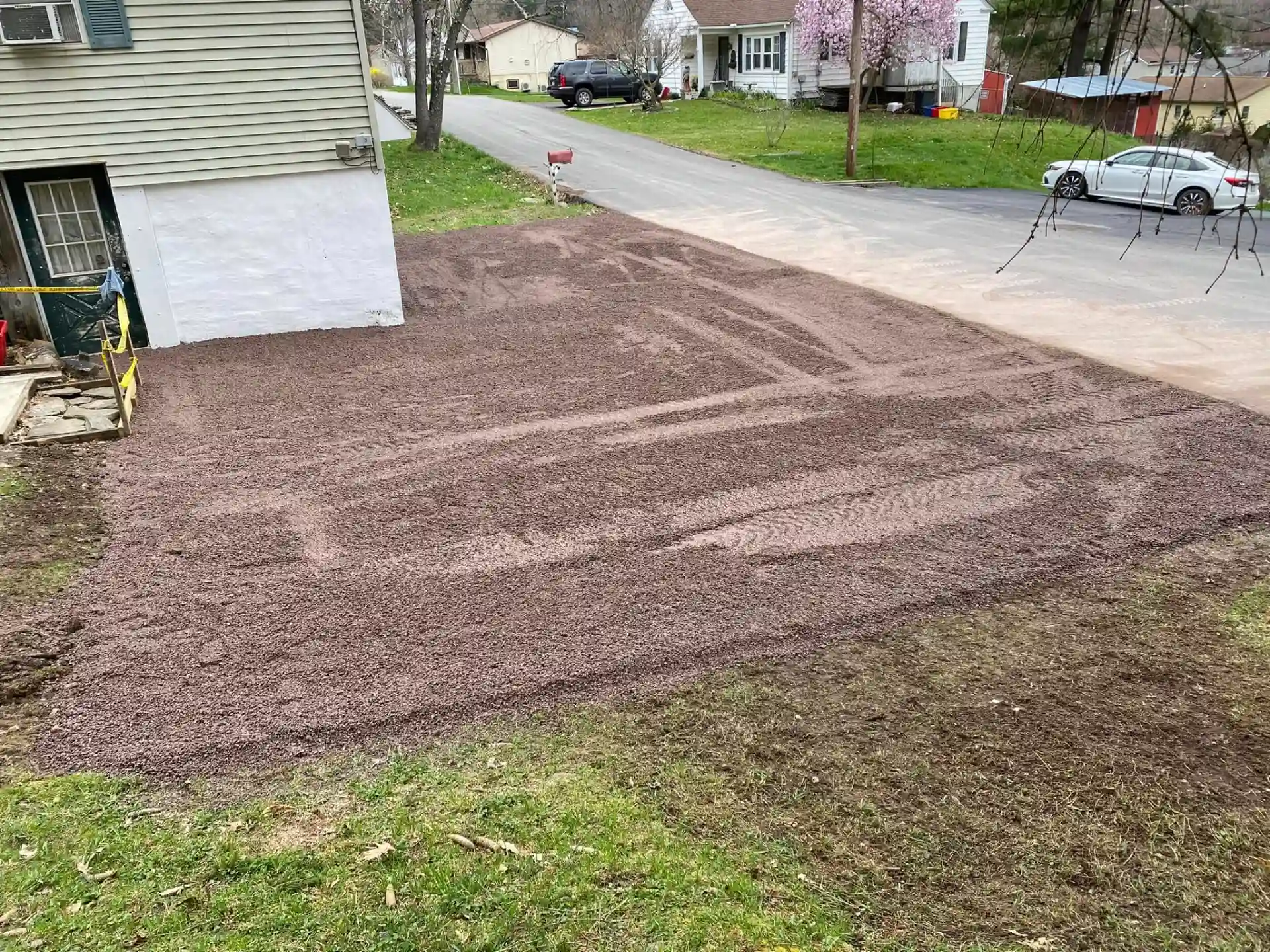
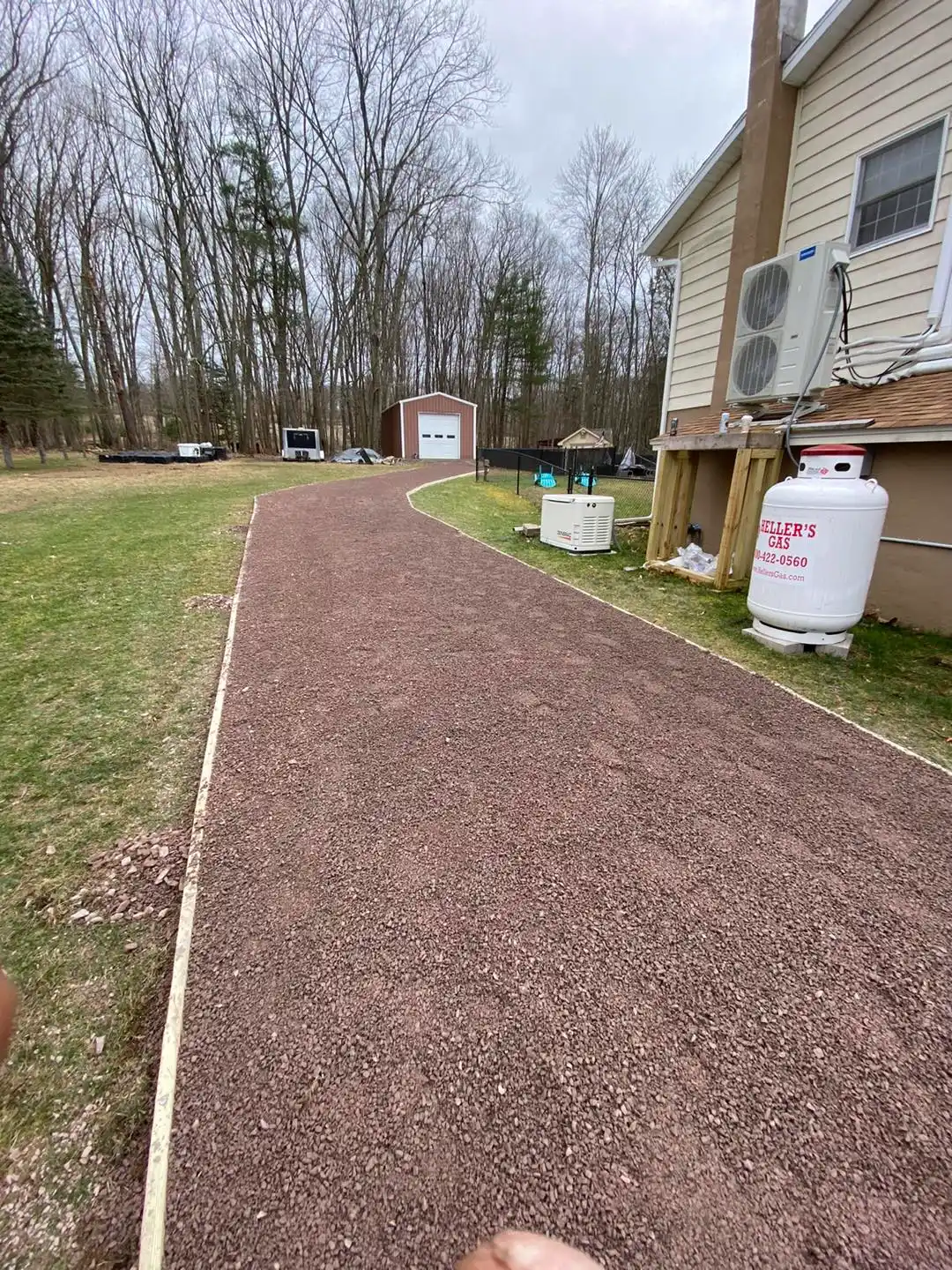
We rebuild the repaired area with material selected for the actual conditions, shape the driveway so it sheds water, and compact the stone instead of leaving it loose.
For the finished driving surface, Alliance normally uses modified stone with fines because it can be:
- Graded
- Shaped
- Crowned
- Compacted
- Locked into a tighter driving surface
The final grade matters as much as the stone.
Water must move off the driving surface instead of settling in low spots or running down the tire tracks.
Which Muddy Driveway Solution Fits the Problem?
| What You See | Likely Cause | Repair May Include |
|---|---|---|
| One soft spot that swallows stone | Weak or saturated subgrade | Local excavation, separation fabric, rebuilt base, modified stone |
| Long muddy wheel tracks | Lost crown and poor surface drainage | Regrading, reshaping, compacting, and additional stone as needed |
| Water entering from a hillside | Seep, spring, or uphill runoff | Intercepting and redirecting water, drainage work, and base repair |
| Washout after every hard rain | Concentrated surface flow | Grade correction, swale or ditch work, culvert or outlet correction |
| Mud near the road entrance | Road runoff, low entrance, or weak base | Entrance reconstruction, drainage correction, fabric, and compacted stone |
| Water collecting at the garage | Driveway slopes toward the building | Regrading and, where appropriate, a trench drain or other interception |
| Stone keeps disappearing | Soil and aggregate are mixing | Excavation as needed, geotextile separation, and a rebuilt stone section |
| The entire driveway stays soft | Widespread base and drainage failure | Larger rebuild planned around water control, access, and traffic |
Why Adding More Gravel Usually Does Not Work
Loose gravel may provide temporary traction, but it does not stop the water or strengthen a saturated base.
When stone is dumped directly into mud:
- Vehicle weight pushes the new stone into the soft soil.
- Mud works upward between the stones.
- The surface becomes uneven and holds more water.
- The same ruts return.
- More purchased material becomes buried underneath.
Wood chips, mulch, scrap material, and loose clean stone may help someone get through a wet area temporarily, but they are not permanent muddy driveway solutions.
Clean 2B stone is useful for drainage applications, but it lacks the fines needed for a tight finished driving surface.
Asphalt millings are also not our standard answer for a failed muddy base. The underlying water, grade, and soil conditions still have to be corrected.
The cheapest repair is not always the lowest initial price. Paying repeatedly for stone that disappears into the same wet area becomes expensive.
Muddy Driveway Repair Cost Near Sweet Valley, PA
The cost depends on what is failing below the surface.
A small localized repair may involve:
- Short excavation
- Geotextile fabric
- Base stone
- Modified surface stone
- Grading
- Compaction
A larger project may require:
- Significant base rebuilding
- Drainage installation
- Culvert work
- Reshaping a long driveway
- Excavated-material removal
- Multiple loads of stone
What Affects the Price?
The main price factors are:
- Length and width of the failed area
- Depth of soft or contaminated material
- Amount and type of stone required
- Whether geotextile fabric is needed
- Access for equipment and tri-axle deliveries
- Slope and difficulty of grading
- Culvert, swale, ditch, or drain requirements
- Where excavated material can be placed or hauled
- Distance to a safe drainage outlet
- Daily vehicle and truck traffic
You can request an estimate online, but a dependable final price requires an on-site inspection.
A photo can show the mud. It usually cannot show the depth of the failed base, the underground water conditions, or the complete path of the runoff.
Muddy Driveway Repair for Northeastern Pennsylvania Conditions
Driveways in Northeastern Pennsylvania deal with more than ordinary rain.
Local conditions can include:
- Wet fall weather
- Snowmelt
- Freeze-thaw cycles
- Spring saturation
- Wooded slopes
- Clay-rich or slow-draining ground
- Seasonal hillside seepage
- Heavy storm runoff
- Long rural driveways
- Delivery and fuel-truck traffic
A driveway that appears hard in August can become soft again in March because the underlying drainage problem never left.
That is why our repairs focus on year-round water movement—not just how the surface looks on the day the job is completed.
Alliance Excavating & Stone Works is based near Sweet Valley and serves homeowners in:
- Sweet Valley
- Hunlock Creek
- Shickshinny
- Benton
- Dallas
- Shavertown
- Trucksville
- Lehman
- Huntsville
- Harveys Lake
- Huntington Mills
- Stillwater
- Chase
- Tunkhannock
- Unityville
- Bear Creek
- Penn Lake Park
- White Haven
- Mountain Top
- Laurel Run
- Other nearby Northeastern Pennsylvania communities
Call 570-690-6297 to confirm service availability for your property.
Why Homeowners Call Alliance Excavating & Stone Works
You do not need a muddy driveway repair company that shows up with a truckload of stone before asking where the water is coming from.
You need a contractor who can explain:
- What failed
- Where the water is coming from
- Whether the surface or the entire base is damaged
- Which part needs to be rebuilt
- Whether drainage work is required
- What can reasonably be expected from the repair
What You Can Expect From Alliance
- Honest on-site evaluation
- Drainage-first troubleshooting
- Excavation when failed material must be removed
- Geotextile fabric where separation is needed
- Proper grading and crown restoration
- Compacted modified stone
- Clear explanation of the proposed work
- Licensed and insured service
- Owner involvement from bidding to billing
- A 5-year workmanship guarantee on covered work
- Local service seven days a week, 7 AM–5 PM
We do not try to turn every muddy spot into the largest possible project.
We recommend the work needed to correct the cause based on the conditions we can see and verify.

Our Service Areas We Serve
Our gravel driveway repair services are available throughout Luzerne and Wyoming counties, including:
- Sweet Valley (our home base)
- Hunlock Creek
- Shickshinny
- Back Mountain
- Dallas, PA
- Harvey’s Lake
- Huntington Mills
- Stillwater
- Chase
- Tunkhannock
- Unityville
We also travel to nearby rural communities. If you’re unsure whether we serve your location, just give us a call.
Testimonials
EXCELLENT Based on 15 reviews
 Posted on Google
 Ann KesslerThe work done by Alliance was excellent. The job was extensive. We had a wet basement that could not be water proofed from the inside. John Deyo worked with the township to devise a plan to redirect the water away from my home. The project was completed in a timely manner and my drainage problem was solved. I also had a new gravel driveway done. It too was done exceptionally well. I was very impressed with the planning, the installation, and the professionalism. I would highly recommend Alliance to anyone.Posted on Google
 Marvin ReemI had Alliance re-gravel my driveway and also put new drainage around the garage entrance. They have a good eye for detail and definitely exceeded my expectations.Posted on Google
 Rick ClemowAlliance did a fantastic job on my driveway, had to cut out a giant rock , laid modified and came out beautiful. Would highly reccomend.Posted on Google
 Timothy Ide“Second time using Alliance Excavating & Stone Works here in Shavertown, PA. I came back because the first job held up exactly like they said it would. This time my driveway had standing water and constant mud issues. I took before and after photos and videos—the difference is unreal. They didn’t just add stone, they fixed the grading and drainage so the water actually moves off the driveway. No more mud, no more puddles. Solid work that lasts. If your driveway keeps failing, call them.”Posted on Google
 Sherry PetroskiWe had constant issues with water running across our driveway and washing the stone out. It would turn into mud every time it rained. Alliance Excavating & Stone Works came in, fixed the drainage, regraded everything, and rebuilt the base the right way. Huge difference. No more washouts and the driveway finally holds up. Highly recommend.
Send us a message

Most Common Questions
Frequently Asked Questions About Fixing Muddy Driveways
The cheapest temporary option may be adding material for traction, but it often sinks and must be replaced.
The lowest-cost permanent approach is to identify the water source early and repair only the affected area before the failure spreads.
A permanent repair generally requires controlling runoff, removing failed material when necessary, separating weak soil from the stone with geotextile fabric, rebuilding the base, shaping the driveway to shed water, and compacting the finished surface.
You can, but it is usually a short-term patch.
Vehicle weight pushes the gravel into the saturated soil, and mud works back through the stone. The repair lasts longer when the weak area is stabilized and the drainage is corrected first.
The right material depends on the depth and condition of the failure.
For the finished surface, Alliance normally uses compactable modified stone with fines rather than loose rounded gravel or clean drainage stone.
Geotextile driveway fabric helps keep the subsoil and aggregate separated, which reduces stone loss and mud pumping.
It does not eliminate the need for drainage, proper base preparation, grading, and compaction.
Frozen ground, snowmelt, and repeated freeze-thaw cycles can leave the subgrade saturated and weak.
If the driveway lacks drainage or a stable separated base, spring traffic quickly creates ruts and pumps mud upward.
Surface mud can be scraped away, but the permanent answer depends on why it formed.
If the driveway is saturated underneath, the failed section may need excavation, drainage correction, fabric, stone, grading, and compaction.
Yes, when the repair involves services Alliance performs.
We inspect whether the water is coming down the driveway, collecting at the apron, or entering from another part of the property. The solution may include regrading and, where appropriate, a trench drain or another drainage correction.
You can submit your contact information, photographs, and a description through our website.
We may be able to discuss the likely scope, but a dependable final quote requires seeing the grade, equipment access, water path, and depth of the failure on site.
Alliance Excavating & Stone Works is open seven days a week from 7 AM to 5 PM.
Call 570-690-6297 or submit the estimate form, and we will respond as soon as possible during business hours.
Many residential repairs can be completed in one or two working days.
Larger projects involving significant excavation, drainage, long driveways, multiple stone deliveries, or difficult access can take longer. We explain the expected schedule before the work begins.