Yard Drainage Services in Northeastern Pennsylvania
Alliance Excavating & Stone Works provides professional yard drainage services throughout Northeastern Pennsylvania. We correct wet lawns, low areas, downspout discharge, hillside runoff, erosion, water moving toward garages and foundations, and drainage systems that are not working properly.
We do not begin by assuming every wet yard needs a French drain. We look at where the water is coming from, how it is moving across or through the ground, and where it can safely discharge.
Call 570-690-6297 to request an on-site drainage evaluation.


Get a Free Estimate
Whether you need affordable driveway repair near you, a drainage solution, or a full gravel driveway installation, we’re ready to help.
Why Homeowners Call Alliance
- Registered and insured
- Owner involved from bidding through completion
- Honest on-site evaluations
- Written project scope and pricing
- Five-year workmanship guarantee on covered installation work
- No-pressure recommendations


Years of Experience
Standing Water Needs a Drainage Path, Not Just More Dirt
The puddle is not always the whole problem.
Water may be coming from a roof downspout, wooded hillside, neighboring property, driveway, compacted soil, underground seepage, failed pipe, or an area with poor grade.
A proper yard drainage system must answer three questions:
- Where is the water coming from?
- How should it be collected or redirected?
- Where can it properly discharge?
When one of those questions is ignored, the water usually returns or gets moved to another part of the property.
Adding dirt over the wet area may hide the problem temporarily, but it can also push the water toward the house, garage, driveway, septic area, or neighboring property.
Common Yard Drainage Problems We Correct
Standing Water After Rain
Water that remains in the lawn long after a storm may be trapped in a low area, blocked by poor grading, or unable to reach a suitable outlet.
The repair may involve grading, a catch basin, solid drainage pipe, a swale, or a combination of methods.
Wet, Soggy, or Muddy Lawn Areas
Soft ground may be caused by surface runoff, saturated soil, roof water, underground seepage, or a failed drainage system beneath the lawn.
Repeatedly adding topsoil or stone usually will not correct the water source.
Downspout Water Near the House
A roof can shed a large amount of water during a hard storm.
When downspouts empty beside the foundation, the water may collect around basement walls, wash out landscaping, saturate the lawn, or travel toward a garage or driveway.
Accessible downspouts can often be connected to solid underground pipe that carries the roof water to a suitable outlet.
Hillside Runoff
Many properties in Northeastern Pennsylvania sit below wooded slopes, roads, fields, neighboring yards, and other higher ground.
Water moving downhill can cross the lawn, remove soil, damage landscaping, flood low areas, or continue toward the house, garage, and driveway.
Yard Sloping Toward the House
When the ground slopes toward a structure instead of away from it, water may collect near the foundation, basement entrance, patio, walkway, or garage.
Correcting the grade may require excavation, fill placement, a swale, catch basin, drainage pipe, or a combination system.
Failed or Clogged Drainage Systems
Existing systems may stop working because of:
- Crushed pipe
- Separated fittings
- Root intrusion
- Sediment buildup
- Poor pipe slope
- Blocked outlets
- Undersized catch basins
- Incorrect pipe type
- Basin grates installed above the actual low point
Alliance can evaluate whether the system can be repaired, extended, corrected, or should be replaced.
How We Find the Source of a Wet Yard
A wet yard should not be treated as one large puddle.
We inspect the surrounding property and determine whether the main problem involves:
- Surface water running across the ground
- Roof runoff coming from downspouts
- Water moving down a hillside
- Saturated soil or underground seepage
- A low area with no drainage path
- Incorrect grading around the house
- Water entering from higher neighboring ground
- Driveway runoff entering the lawn
- A damaged or improperly installed drainage system
- An outlet that is blocked, too high, or missing
The correct yard drainage solution depends on how the water is moving.
A French drain may help collect water moving through saturated soil, but it may do very little for a large amount of fast-moving surface runoff.
A catch basin can collect surface water from a low area, but it still needs correctly sized pipe, adequate slope, and a suitable outlet.
We inspect the complete drainage path before recommending excavation.

Yard Drainage Conditions We Commonly See in Northeastern Pennsylvania
Properties around Sweet Valley, the Back Mountain, Harveys Lake, Hunlock Creek, Shickshinny, Benton, and surrounding communities are rarely simple, perfectly flat building lots.
We regularly evaluate combinations of:
- Water moving down wooded hillsides
- Roof runoff entering already wet ground
- Low lawns below roads or neighboring properties
- Driveways concentrating runoff into one location
- Heavy or compacted soil that drains slowly
- Shale and rock affecting excavation
- Old corrugated pipe that is crushed or poorly sloped
- Snowmelt entering saturated soil
- Roadside drainage affecting private property
- Garages and basement entrances built below surrounding grade
The water problem often involves more than one source. That is why some properties need a combination of surface collection, subsurface drainage, grading, and solid discharge pipe.
Residential Yard Drainage Services We Provide
Alliance provides complete yard drainage services based on the actual conditions of the property. Some projects need one straightforward correction, while others require grading, catch basins, underground pipe, French drains, swales, and outlet work working together as one system.
Small elevation differences can determine whether water moves away from a house or collects in the middle of the lawn. Yard grading may involve correcting low areas, establishing positive drainage away from structures, reshaping ground near a house or garage, directing runoff toward a swale or catch basin, repairing erosion, and creating a controlled surface drainage path.
A swale is a shallow, graded channel used to redirect surface water across a property. It may carry water around a house, intercept hillside runoff, move water away from a driveway, reduce erosion, or guide runoff toward a stable outlet without burying excessive pipe. A properly shaped swale should move water without becoming a steep ditch, creating an erosion channel, or directing the drainage problem onto another property.
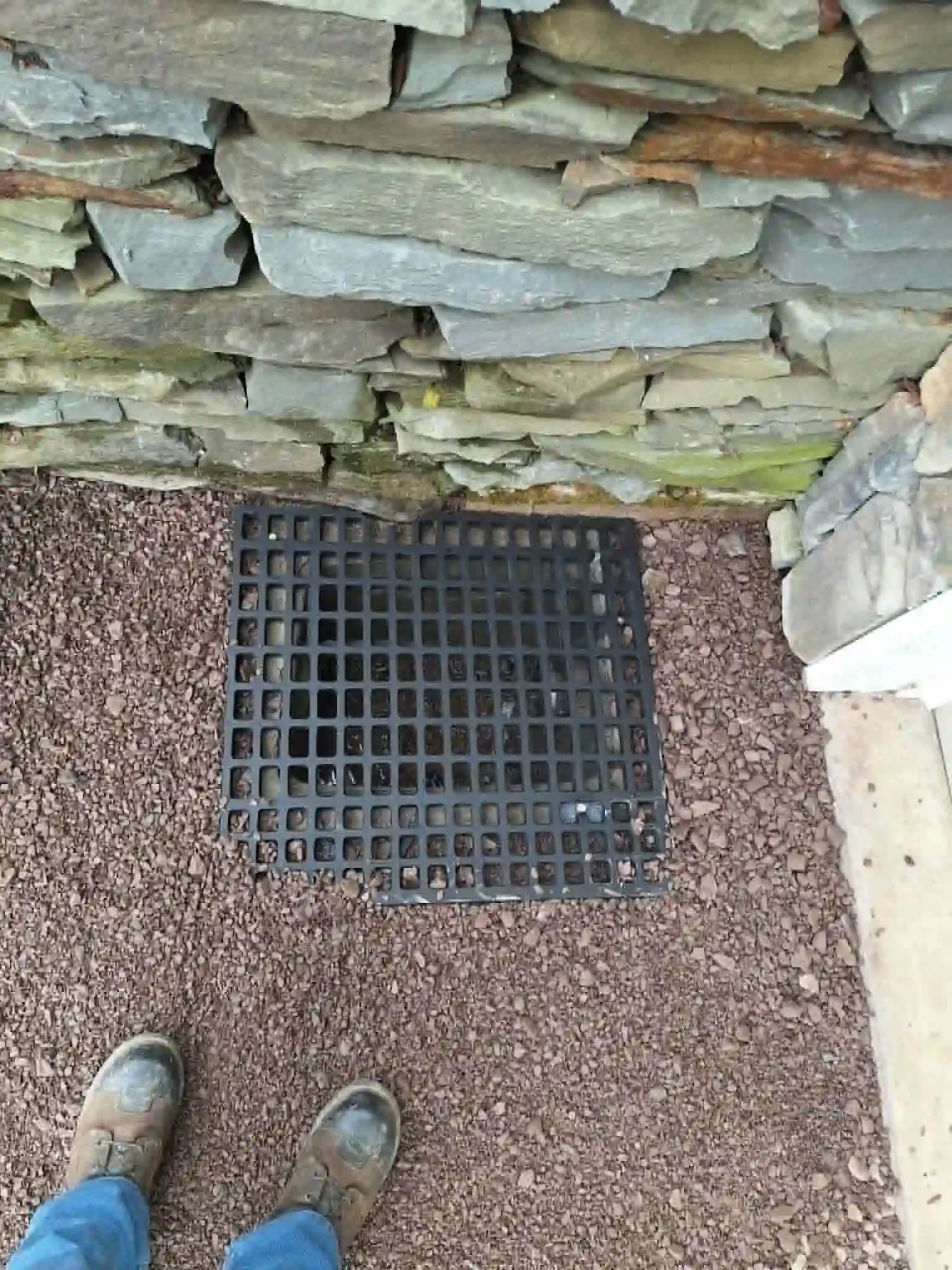
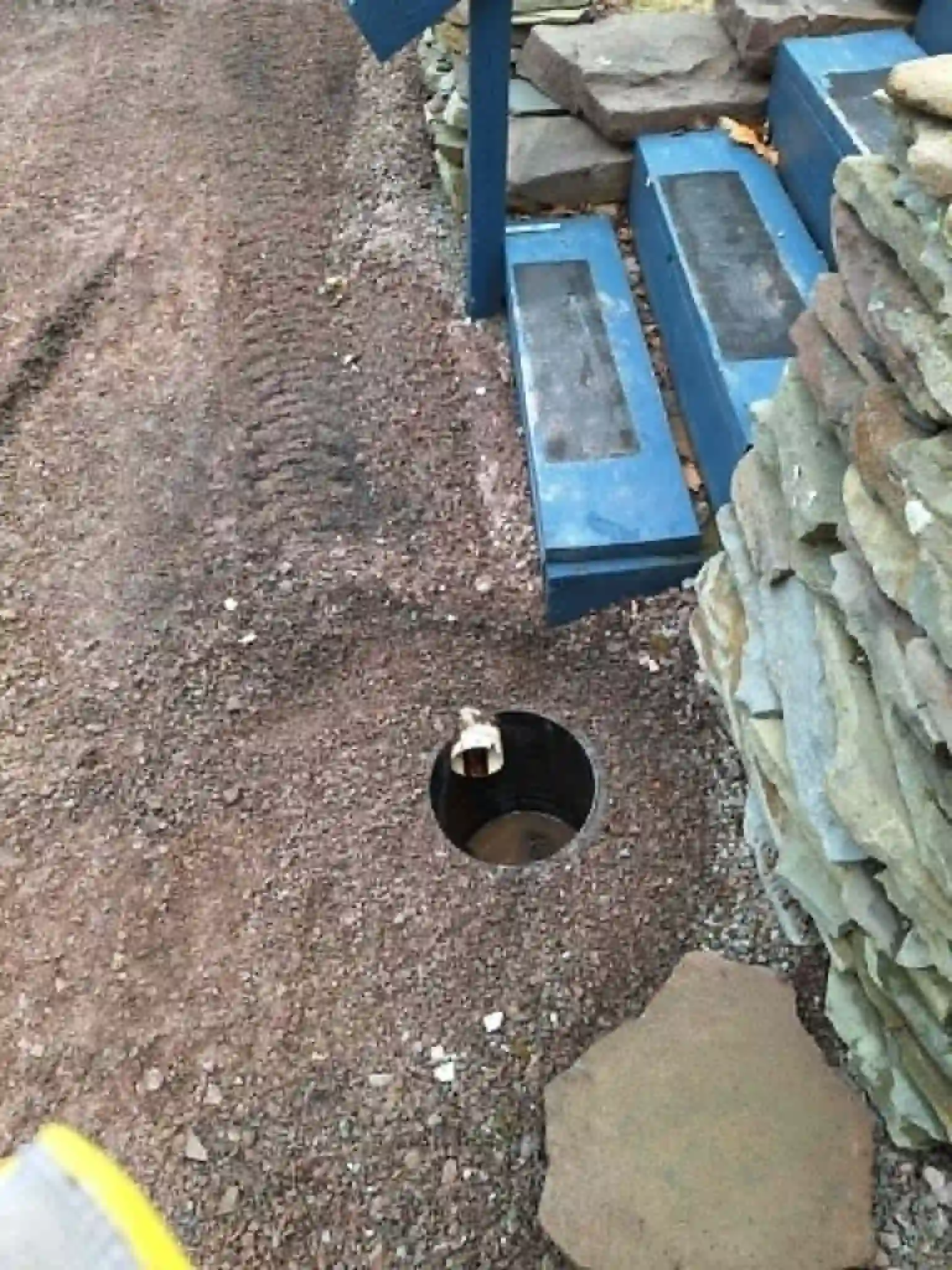
A catch basin collects surface water through a visible grate and sends it into solid underground drainage pipe. Catch basins are often installed in low lawn areas, near patios, walkways, garages, driveways, foundations, or places where several water paths come together. Proper catch basin installation requires more than placing a box in the ground. The low-point elevation, expected water volume, basin size, grate height, pipe diameter, pipe slope, outlet location, and future cleaning access must all be considered.
Downspouts should not empty beside the foundation or into a low area that cannot drain. Alliance can connect accessible downspouts to solid underground pipe and carry roof water away from the structure. A downspout drainage system may include solid PVC pipe, downspout adapters, fittings, cleanouts, buried extensions, daylight outlets, and erosion protection at the discharge point. Solid pipe is normally used because the goal is to keep roof water inside the pipe until it reaches the outlet. Perforated pipe is generally used to collect water from saturated ground.
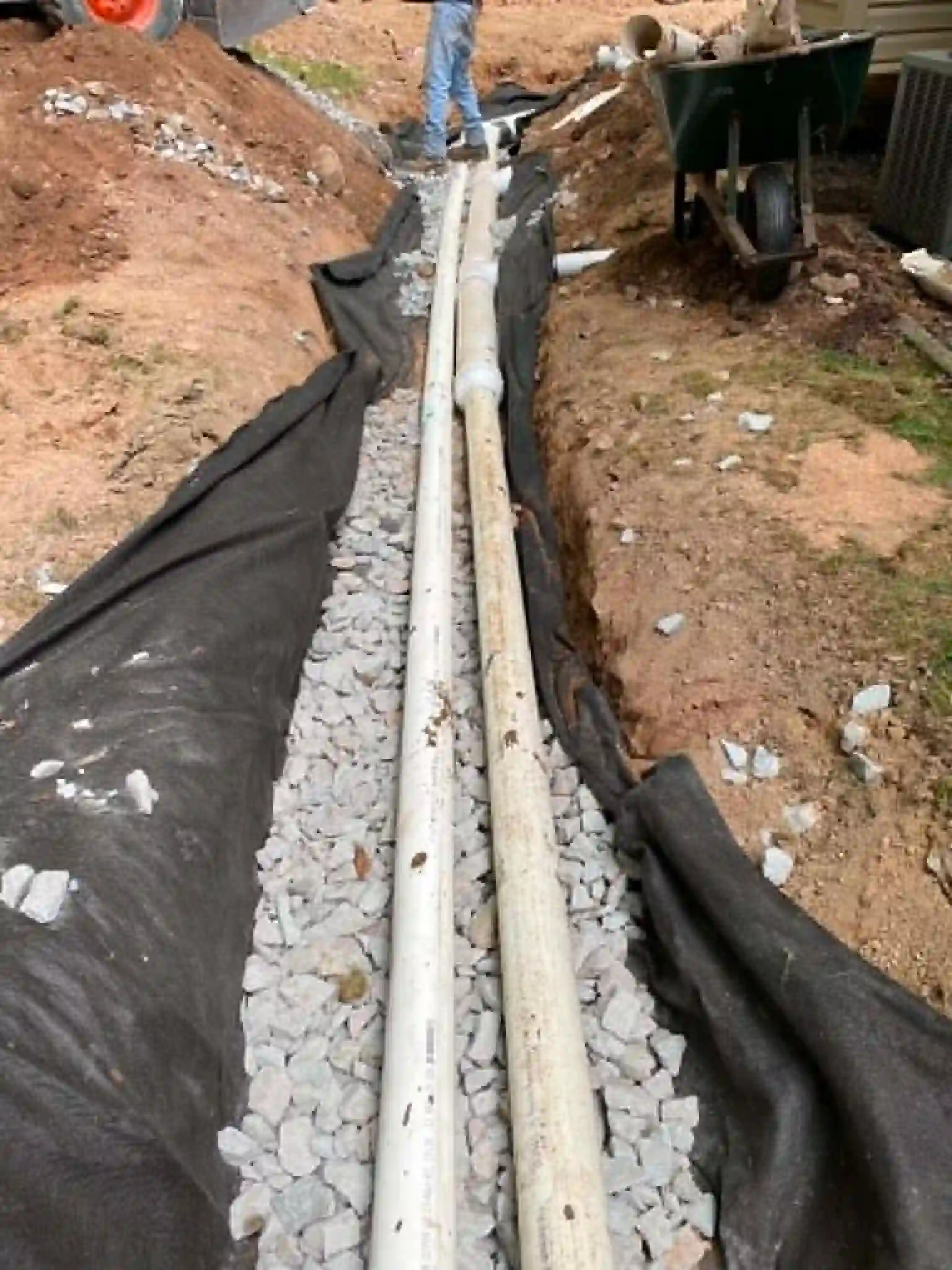
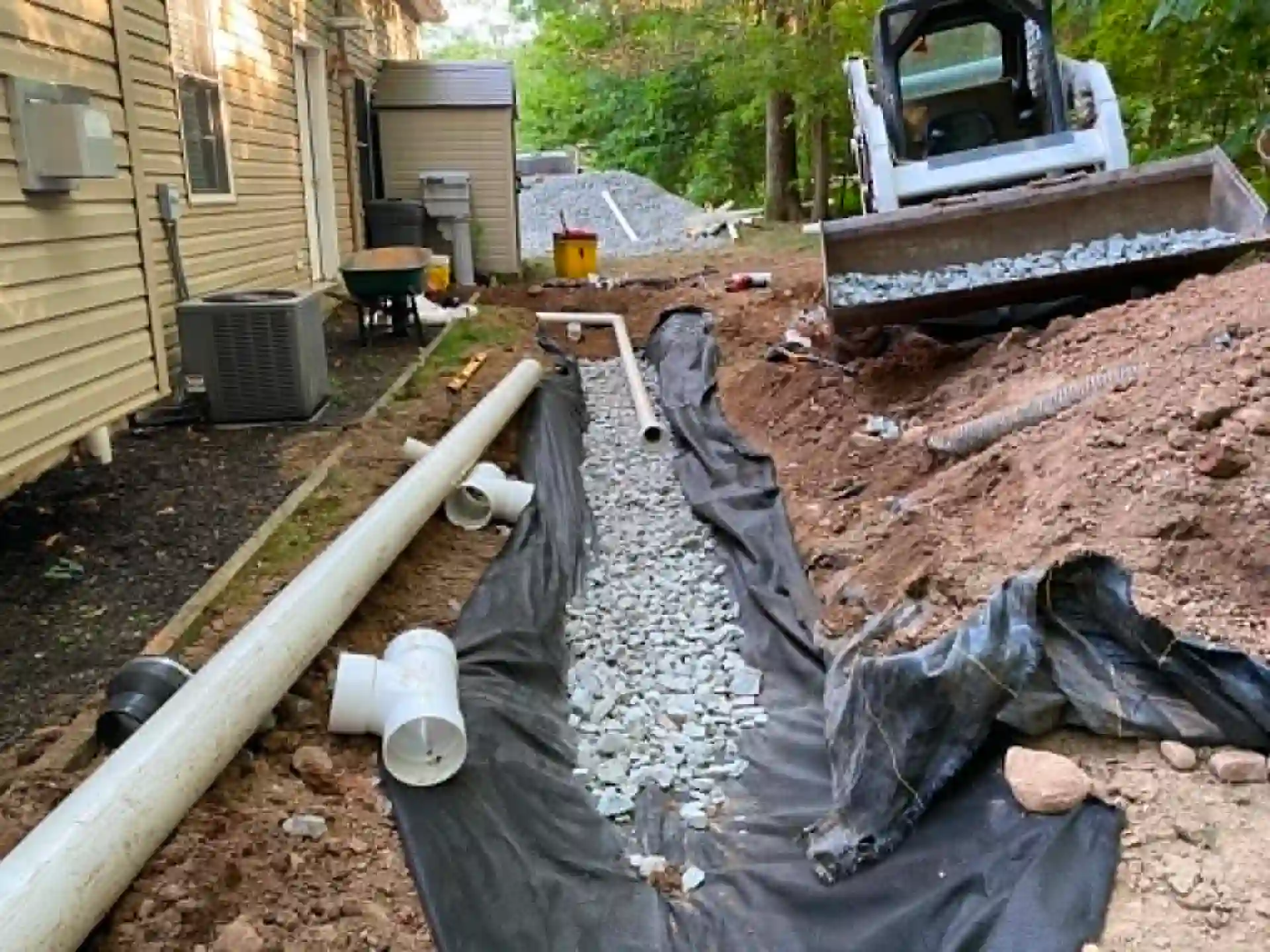
A French drain collects water moving through wet or saturated soil. The system may include an excavated trench, geotextile fabric, clean drainage stone, perforated pipe, proper slope, and a suitable discharge outlet. French drains may be appropriate for subsurface seepage, saturated ground, wet areas below a hillside, or water moving toward a garage, house, lawn, or driveway. A French drain is not automatically the right repair for every wet yard.
Water moving downhill may need to be intercepted before it reaches the area being damaged. Depending on the property, hillside runoff may require a diversion swale, interceptor drain, catch basins, solid pipe, controlled grading, outlet stabilization, or a combination of surface and subsurface drainage. Whenever practical, the goal is to control the water earlier in its path instead of waiting until it reaches the lowest and wettest area of the property.
Sweet Valley Yard Drainage Case Study
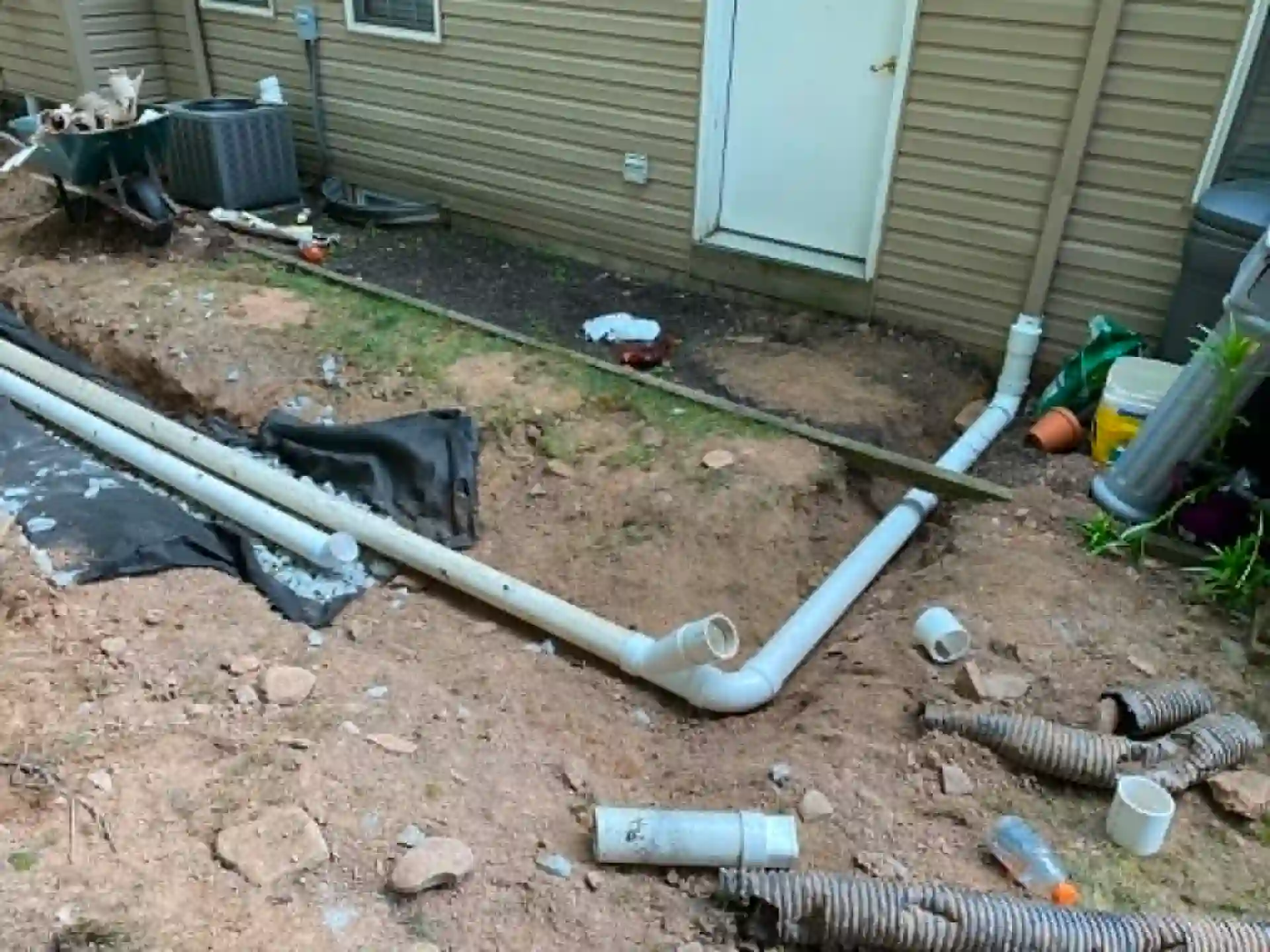
Catch Basin and French Drain Installed for Basement and Garage Water
A Sweet Valley homeowner contacted Alliance after water was getting into the basement and garage.
The property required two different methods of water collection because the water near the garage was not being handled by one drainage path.
The Problem
Water was reaching the garage area and contributing to water entering the garage and basement.
The area in front of the garage also needed subsurface drainage to intercept water moving through the wet ground.

The Drainage System We Installed
Alliance installed:
- A catch basin to collect surface water
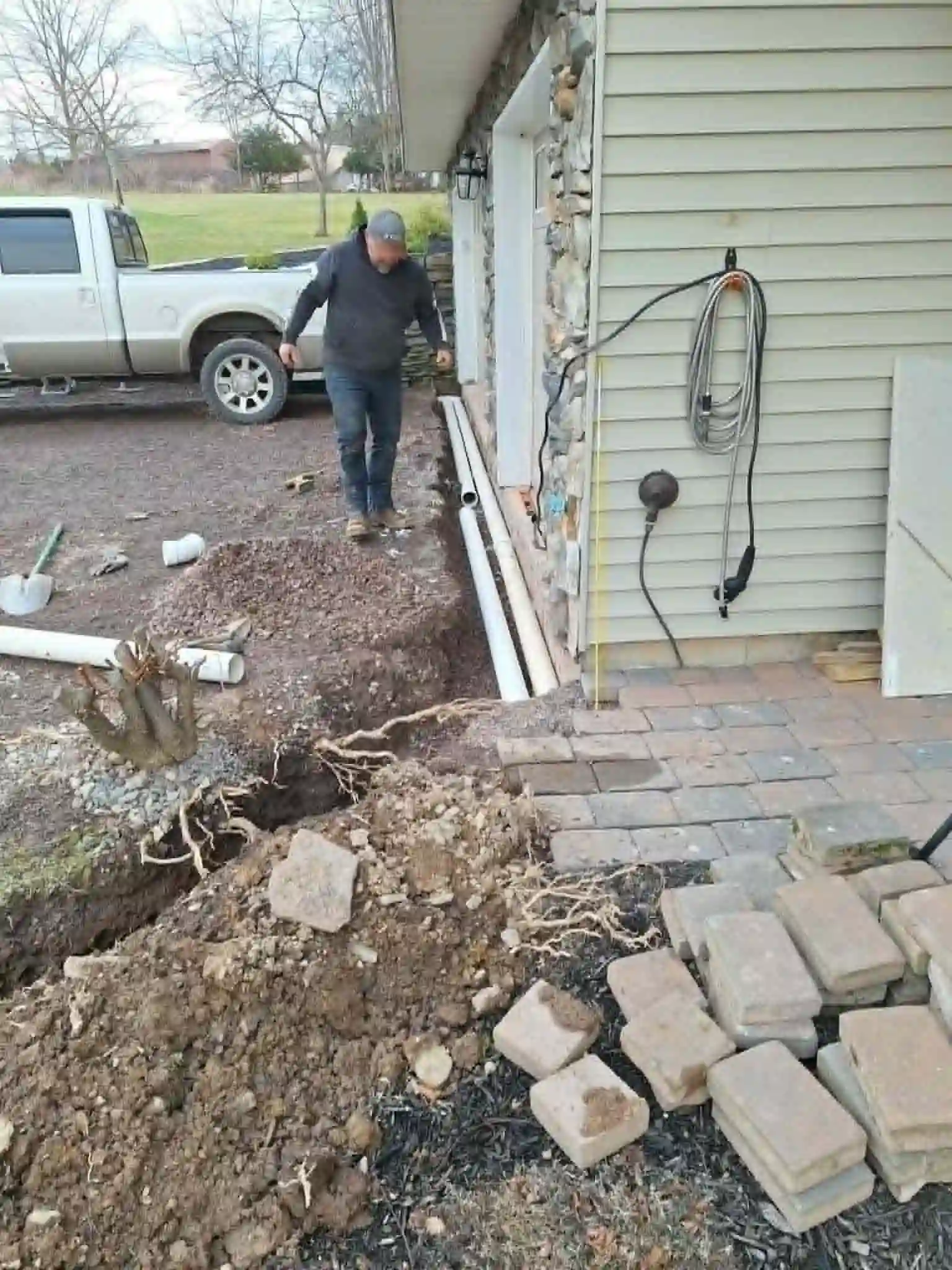
- Four-inch Schedule 40 solid PVC drainage pipe connected to the catch basin
- A French drain in front of the garage
- Four-inch perforated Schedule 40 PVC pipe inside the French drain system
The catch basin collects water moving across the surface.
The solid Schedule 40 pipe keeps the collected water contained as it moves away from the problem area.
The perforated Schedule 40 pipe in front of the garage collects water moving through the surrounding saturated ground.
Why Two Pipe Types Were Used
Solid and perforated drainage pipe serve different purposes.
The solid pipe carries captured surface water without allowing it to escape back into the soil.
The perforated pipe allows subsurface water to enter the French drain and be carried away from the garage area.
Using both systems allowed Alliance to address surface water and saturated ground instead of relying on one drain to handle two different problems.
The Completed System
The completed system gives surface water a controlled entry point through the catch basin while the French drain intercepts water in front of the garage.
This Sweet Valley project is a good example of why we evaluate the complete water path before recommending a drainage system.
A catch basin alone would not collect all the water moving through the saturated ground. A French drain alone would not provide the same direct collection point for concentrated surface runoff.

Which Yard Drainage Solution Might Your Property Need?
| Water problem | Possible drainage solution |
|---|---|
| Water collecting in a low lawn area | Catch basin, grading, surface drain, or combination |
| Yard sloping toward the house | Regrading, swale, interceptor drain, or drainage pipe |
| Downspouts emptying near the foundation | Solid underground downspout pipe |
| Surface water crossing the lawn | Swale, grading, catch basin, or solid piping |
| Saturated soil or underground seepage | French drain or interceptor drain |
| Water coming down a hillside | Diversion swale, catch basin, interceptor drain, or combination |
| Existing drainage pipe holding water | Pipe repair, slope correction, cleaning, or a new outlet |
| Erosion caused by concentrated runoff | Controlled collection, stable piping, grading, and outlet protection |
These are possible solutions, not an automatic diagnosis.
The correct system depends on elevations, water volume, soil conditions, structures, access, pipe slope, and the available outlet.
Why Yard Drainage Systems Fail
Even a newly installed drainage system can fail when the complete drainage path is not planned correctly.
Common causes include:
- No suitable drainage outlet
- Insufficient pipe slope
- Perforated pipe used to transport downspout water
- Solid pipe used where subsurface collection was needed
- Crushed or separated pipe
- Undersized catch basins
- Catch basin grates installed above the low point
- Soil and sediment entering the system
- Incorrect stone or geotextile
- Roots blocking the pipe
- Downspouts overwhelming a small drainage system
- Dirt added without correcting the grade
- Water redirected toward another problem area
- Discharge points blocked by leaves, soil, ice, or vegetation
We evaluate whether an existing system can be repaired, corrected, extended, or should be replaced.
How We Evaluate and Install Yard Drainage Systems
1. On-Site Evaluation
We inspect the wet areas, surrounding slopes, downspouts, structures, driveways, existing drains, and possible discharge locations.
2. Identify the Water Source
We determine whether the main issue is surface runoff, roof water, poor grading, subsurface seepage, hillside runoff, driveway water, or an existing system failure.
3. Evaluate the Outlet
We determine whether the water can move by gravity to a suitable discharge point.
A drainage system without a usable outlet may remain full and fail to control the water.
4. Recommend the Correct Solution
We explain whether the property needs grading, a swale, catch basin, solid pipe, French drain, outlet correction, or a combination.
5. Provide a Written Scope
The proposal explains the planned work, materials, installation method, restoration, exclusions, price, and payment terms.
6. Excavate and Install
We install the specified drainage pipe, fittings, catch basins, stone, geotextile, grading, and outlet components.
7. Backfill and Restore
Disturbed areas are backfilled and finished according to the written scope.
Topsoil, seed, straw, stone, material disposal, landscaping repair, and other restoration work are clearly identified in the proposal.
How Much Do Yard Drainage Services Cost?
There is no honest flat price for every drainage problem.
A short downspout extension through open ground is very different from regrading a large wet yard, installing several catch basins, crossing a driveway, or intercepting water coming down a hillside.
The cost of yard drainage services may depend on:
- Total pipe length
- Pipe type and diameter
- Excavation depth
- Number and size of catch basins
- Amount of drainage stone
- Geotextile requirements
- Soil, shale, and rock conditions
- Equipment access
- Existing landscaping
- Grading requirements
- Distance to the outlet
- Whether a usable outlet exists
- Utility locations
- Material disposal
- Lawn restoration
- Permit or engineering requirements
A lower-priced proposal may cover only the visible wet spot while leaving out the outlet, pipe length, restoration, disposal, grading, or catch basins.
Compare the written scope—not just the total price.
Alliance provides a written proposal so the homeowner understands what is included before work begins.
When Yard Drainage Work May Require Another Professional
Alliance handles many residential excavation, grading, catch basin, piping, swale, and French drain projects.
Some conditions may require input from an engineer, surveyor, plumber, waterproofing specialist, township, utility provider, or another qualified professional.
Examples include:
- Major stormwater volume
- Structural foundation concerns
- Public storm-sewer connections
- Road or right-of-way drainage
- Neighboring property disputes
- Wetlands or protected waterways
- Uncertain property boundaries
- Retaining-wall failure
- Septic system conflicts
- Pumped drainage systems
- Engineered stormwater requirements
- Properties that cannot drain by gravity
We would rather explain that a project requires additional evaluation than pretend a basic drain can solve a complicated site condition.
Why Hire Alliance as Your Yard Drainage Contractor?
Alliance Excavating & Stone Works is a local excavation, grading, driveway, and residential drainage contractor based near Sweet Valley, Pennsylvania.
Homeowners choose Alliance because we provide:
- Honest on-site evaluations
- Clear explanations of the water problem
- Excavation and grading capability
- Catch basin installation
- Solid underground drainage piping
- French drains when they match the problem
- Written project scopes
- Straightforward pricing
- Owner involvement from bidding through completion
- Registered and insured residential contracting
- Five-year workmanship guarantee on covered installation work
- No-pressure recommendations
We do not promise that a yard will never experience water during every possible storm.
We explain what the proposed system is designed to handle, where the water will go, what work is included, and what conditions remain outside the project scope.
Field reviewed by John Deyo, owner of Alliance Excavating & Stone Works.
Yard Drainage Services Across Northeastern Pennsylvania
Alliance provides yard drainage services throughout Luzerne, Wyoming, Columbia, Sullivan, and surrounding areas of Northeastern Pennsylvania.
Common service areas include:
- Sweet Valley
- Hunlock Creek
- Shickshinny
- Dallas
- Shavertown
- Trucksville
- Harveys Lake
- Lehman
- Huntsville
- Benton
- Stillwater
- Huntington Mills
- Tunkhannock
- Chase
- Unityville
- Bear Creek
- Mountain Top
- Penn Lake Park
- White Haven
- Nearby rural communities
Not sure whether we cover your property?
Call 570-690-6297 and tell us where the drainage problem is located.
Is water also damaging your driveway? Learn more about our driveway drainage repair service.
Here's What Our Clients Say About Us - Real Reviews From Google
EXCELLENT Based on 15 reviews
 Posted on Google
 Ann KesslerThe work done by Alliance was excellent. The job was extensive. We had a wet basement that could not be water proofed from the inside. John Deyo worked with the township to devise a plan to redirect the water away from my home. The project was completed in a timely manner and my drainage problem was solved. I also had a new gravel driveway done. It too was done exceptionally well. I was very impressed with the planning, the installation, and the professionalism. I would highly recommend Alliance to anyone.Posted on Google
 Marvin ReemI had Alliance re-gravel my driveway and also put new drainage around the garage entrance. They have a good eye for detail and definitely exceeded my expectations.Posted on Google
 Rick ClemowAlliance did a fantastic job on my driveway, had to cut out a giant rock , laid modified and came out beautiful. Would highly reccomend.Posted on Google
 Timothy Ide“Second time using Alliance Excavating & Stone Works here in Shavertown, PA. I came back because the first job held up exactly like they said it would. This time my driveway had standing water and constant mud issues. I took before and after photos and videos—the difference is unreal. They didn’t just add stone, they fixed the grading and drainage so the water actually moves off the driveway. No more mud, no more puddles. Solid work that lasts. If your driveway keeps failing, call them.”Posted on Google
 Sherry PetroskiWe had constant issues with water running across our driveway and washing the stone out. It would turn into mud every time it rained. Alliance Excavating & Stone Works came in, fixed the drainage, regraded everything, and rebuilt the base the right way. Huge difference. No more washouts and the driveway finally holds up. Highly recommend.
Tell us what is happening, and we will schedule a free on-site estimate.

Common Questions
Most Popular Questions
Driveway repair costs vary depending on what the job actually requires. A simple regrading job with stone topping is far less involved than a full excavation with drainage installation. The only honest way to give you a number is to see the driveway. We offer free on-site estimates with no pressure or obligation. Call 570-690-6297 to schedule yours.
Mud is almost always a sign that the base underneath your gravel has failed or was never built correctly in the first place. When water saturates the sub-base and there's no drainage to move it away, the stone above it gets pushed around and the surface turns soft. Adding more gravel on top of a failed base is a temporary fix at best. The real solution is to address the base preparation and drainage — which is exactly what we do.
We fix the underlying problem. That starts with diagnosing what's actually causing the failure — whether it's a weak base, poor grading, inadequate drainage, or all three. We repair or rebuild the base, correct the surface grade so water runs off properly, and install drainage systems where needed before any surface stone goes down.
We serve Sweet Valley, Hunlock Creek, Shickshinny, Back Mountain, Dallas, Harvey's Lake, Huntington Mills, Stillwater, Chase, Tunkhannock, Unityville, and surrounding communities throughout Luzerne, Wyoming, Columbia, Montour, and Sullivan Counties. If you're unsure whether we cover your area, give us a call.
If water is pooling on the surface after rain, running toward your garage, collecting in low spots along the driveway edges, or your yard stays saturated well after a storm — you almost certainly have a drainage problem that needs to be addressed as part of any repair. We assess drainage as part of every free estimate.
Most residential driveway repairs are completed in one to two days, depending on the size and what the job requires. Larger jobs involving significant excavation, drainage installation, or new driveway construction may take longer. We give you a realistic timeline before we start.
Regrading is the process of reshaping the surface of your driveway so that it sheds water correctly. A properly graded driveway has a slight crown in the center and a gentle slope from high end to low end, so rain runs off to the sides rather than pooling. Over time, driveways settle unevenly and lose this shape. If your driveway holds water after a rain, regrading is often one of the most cost-effective ways to address the problem.
Yes. Water intrusion near a garage entrance is almost always solvable through a combination of driveway regrading and trench drain installation at the apron.